
How To Start A Dog Walking Business: A Complete Beginner’s Guide
Starting a dog walking business is a low-cost, flexible way to earn income while spending time outdoors, and it can grow from a simple side job into a thriving service business if you build the right systems early. This guide walks you through the essential steps: assessing whether the work is right for you, planning your services, choosing equipment, handling finances, setting up dog walking business insurance, and preparing for long-term growth.
1. Decide if Dog Walking Is Right for You
Before launching, take an honest look at whether the lifestyle and responsibilities match your strengths. Dog walkers need stamina, consistency, and excellent time management. The work is outdoors, often early or late in the day, and requires comfort handling different breeds and temperaments.
If you enjoy animals, value flexible scheduling, and are reliable enough to be trusted with someone’s pet, you’re already off to a strong start. Experience with your own pets or volunteer work helps, but formal training isn’t required for most areas.
2. Plan the Services You Want to Offer
A successful dog walking business starts with clear, well-defined services. The more specific you are about what you offer, the easier it is to set expectations and attract clients.
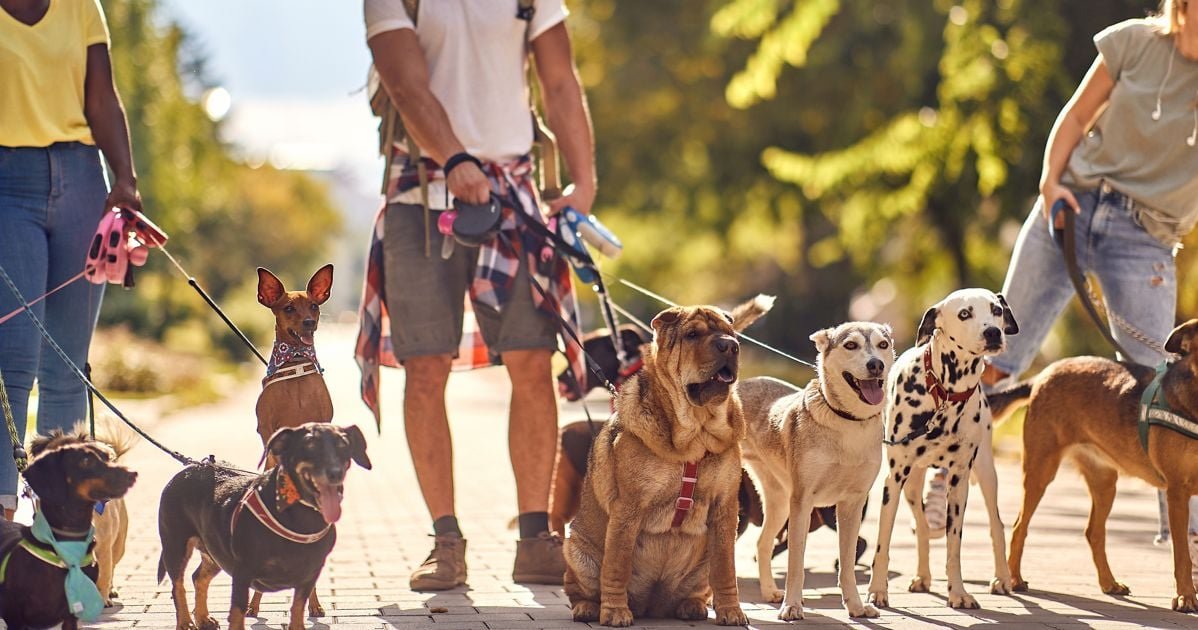
You may include solo neighborhood walks, group walks, or specialized options like senior dog care, high-energy dog exercise, or services tailored to anxious or reactive dogs. Some walkers expand into pet sitting, check-ins, or light grooming. Offering a mix of services that aligns with your skills and your local demand can help position you competitively.
As you build your brand, choosing memorable dog walking business names can also help you stand out in a crowded market and reinforce your identity within your community.
3. Set Up the Basics: Legalities, Insurance & Organization
Even though starting a dog walking business is relatively affordable, you’ll want a foundation that looks professional from day one.
Setting up a business structure, registering your name, and securing dog walking business insurance are early steps that protect you legally and financially. Insurance provides coverage if accidents, injuries, or property damage occur while a dog is under your care — a critical safeguard in a hands-on, unpredictable field like pet services.
You’ll also need a system for scheduling, record-keeping, and payments. Learning basic accounting helps you organize income and expenses, track cash flow, and plan for taxes or reinvestment. When understanding your billing process, it’s important to know what is an invoice and how to create clear, professional invoices so clients can pay consistently and on time.
Having these systems organized early reduces stress and increases your professionalism — traits dog owners value highly.
4. Research Your Market and Define Your Service Area
Understanding local demand makes it easier to position your business. Research nearby neighborhoods, apartment complexes, and busy commuting areas where pet owners may need help during work hours. Evaluate existing walkers to understand typical pricing, service gaps, and opportunities you can fill.
This research can also guide which services you emphasize, and whether certain niches — such as high-energy dogs or specialized senior pet walks — may give you an advantage in your market.
5. Set Pricing and Policies That Build Trust
Transparent pricing helps clients make confident decisions. Whether you charge per walk, per hour, or offer discounted weekly packages, consistency matters.
You should also clarify policies early — cancellation rules, emergency procedures, limits on group sizes, and payment methods. Setting clear guidelines helps reduce misunderstandings and makes clients feel safe entrusting their pets to you.
Strong policies also make your business look more polished and trustworthy, which can help you grow faster.
6. Launch Your Business and Start Finding Clients
Acquiring your first clients may be the most challenging part, but it becomes significantly easier once you build a small base of satisfied pet owners.
Effective approaches include:
-
Telling friends, neighbors, and family
-
Posting flyers in dog-friendly areas
-
Sharing photos and walk updates on social media
-
Joining local pet groups
-
Offering trial walks or introductory discounts
As momentum builds, word-of-mouth referrals often become your strongest source of new clients.
7. Provide High-Quality, Reliable Service
Your reputation becomes the backbone of your business. Reliability, punctuality, clear communication, and genuine care for animals help you build trust with pet owners. Sending walk summaries, photos, or updates creates transparency and strengthens client relationships.
You should also stay organized by tracking bookings, avoiding double-scheduling, and maintaining clean gear. Happy pets and happy owners lead to consistent repeat bookings and strong client loyalty.
8. Grow and Expand When the Time Is Right
Once you have steady clients, you can expand by increasing your service area, offering group walks, adding new pet services, or hiring additional walkers. A thoughtful approach to scaling ensures you maintain quality while increasing revenue.
As your business grows, you may update your policies, refine your branding, or adjust your pricing to reflect your experience and demand.
9. Recognize Common Challenges and Plan Ahead
Dog walking brings many rewards, but challenges such as unpredictable weather, physical strain, liability concerns, or fluctuating bookings are realities.
This is where having dog walking business insurance, organized scheduling, clear safety policies, and good communication all help — they reduce risk and build resilience. Knowing your limits and planning ahead makes your business more sustainable.
FAQ
What startup costs should I expect?
Most dog walking businesses require minimal gear and modest insurance. Leashes, waste bags, water bottles, and weather-appropriate clothing make up most initial costs.
Do I need certification?
Not usually. Experience, trustworthiness, and clear communication matter more. Pet first-aid training can help but is optional.
How many dogs can I walk at once?
It depends on your comfort and local regulations. Most walkers begin with one or two dogs per walk.
How should I set my prices?
Base them on local competition, your experience, your operating costs, and walk duration.
Is dog walking a long-term business?
Yes — many dog walkers build full-time careers, especially once they develop strong reputations and steady client bases.