Lawn Care Tools: The Tools Needed to Start a Lawn Care Business
Lawn Care Tools
Starting a lawn care business doesn’t require a massive investment, but it does require the right lawn care tools to deliver reliable, professional results. The tools you choose in the beginning set the pace for your workflow, the quality of your service, and how confidently you can take on new clients. Most successful lawn care owners begin with a small, efficient tool setup and expand as their customer base grows.
Before buying equipment, it helps to understand the type of work you want to offer, the yards you’ll be maintaining, and the clients you plan to serve. These factors—combined with a simple Business Plan Outline—will guide you toward the right tool choices without overspending.
Why the Right Lawn Care Tools Matter
Your tools are the heart of your lawn care business. They determine the quality of your cut, the speed of your work, and the physical effort required each day. Well-chosen tools help you move efficiently from yard to yard, reduce downtime caused by repairs, and make your job safer and more manageable.
Even if you’re starting small, choosing durable equipment means you can take on consistent clients with confidence. Your tools become part of your brand—customers notice when a lawn care provider shows up prepared, organized, and equipped for professional work.
Essential Lawn Care Tools for New Businesses
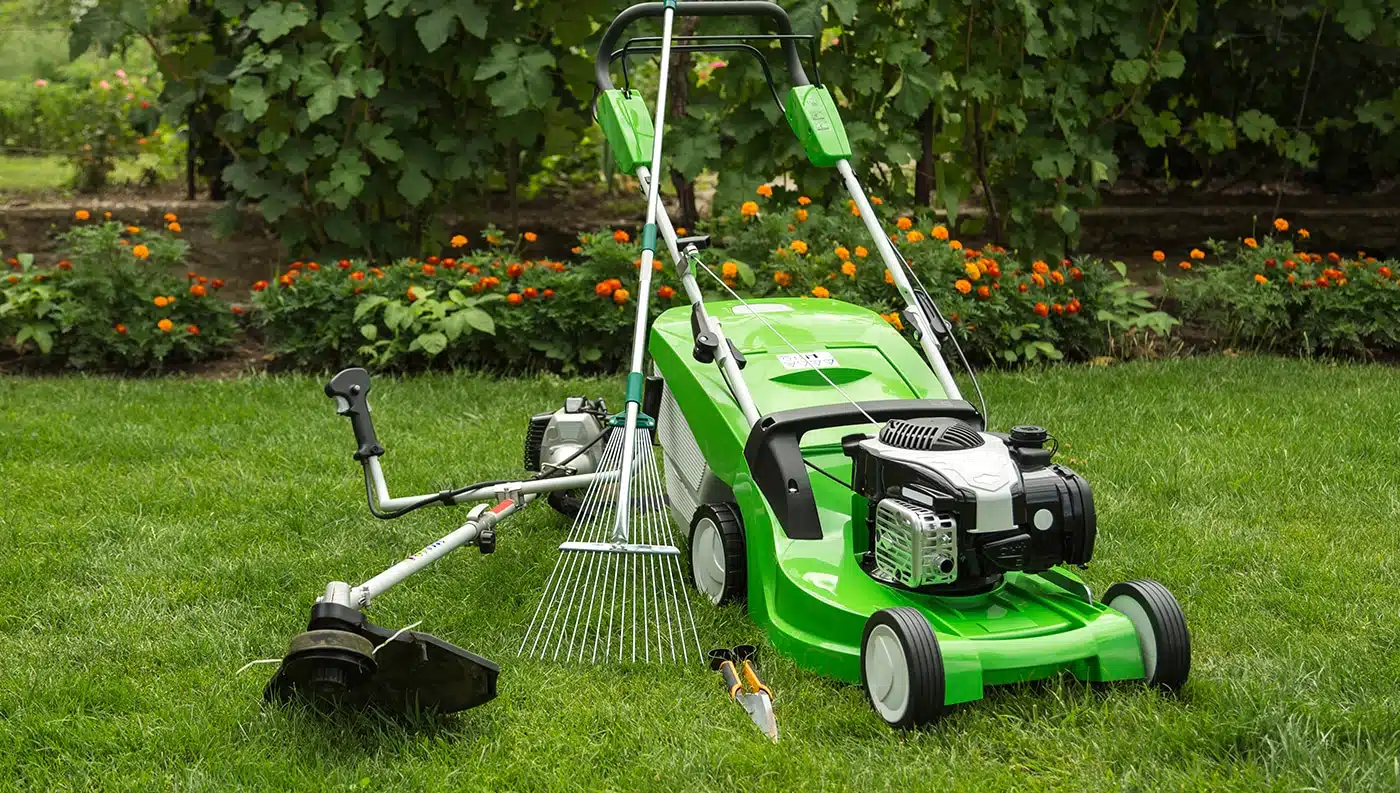
Most new lawn care businesses begin with a small but effective equipment setup. You don’t need every tool on the market; you need a reliable foundation that allows you to perform weekly mowing, trimming, and cleanups.
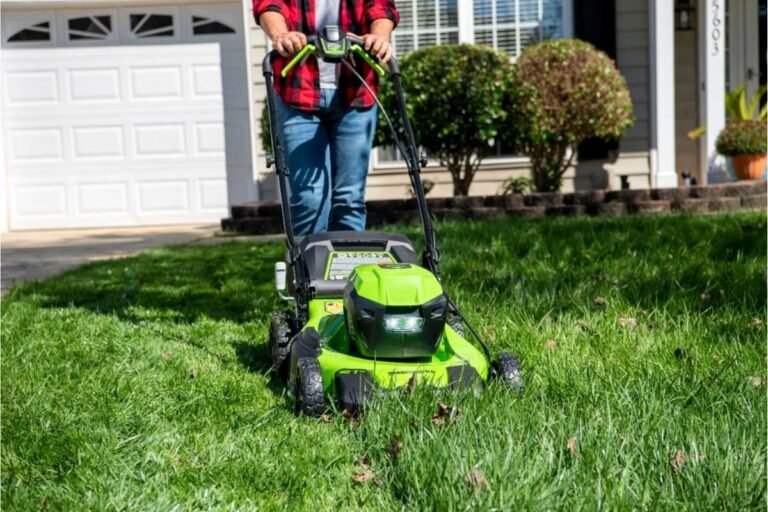
A lawn mower is typically the centerpiece of your equipment. Whether you choose a push mower or a self-propelled model depends on the size of the properties you’ll be maintaining. Many beginners start with a residential mower and upgrade to commercial equipment as their client list grows.
A string trimmer is the next essential tool. It allows you to create clean edges along walkways, fences, trees, and flower beds—details that customers notice immediately. Paired with a leaf blower for clearing grass clippings and debris, this simple trio of tools is enough to begin offering reliable lawn maintenance services.
As you expand, you may add hedge trimmers, basic hand tools, or specialty equipment depending on demand. The goal is to build a toolset that supports your workflow without overwhelming your budget.
How to Choose Quality Tools Without Overspending
Choosing the right lawn care tools is about balancing durability, power, and cost. Many new owners prefer to start with well-maintained used equipment or mid-range brands that offer professional performance without the premium price tag.
It’s important to consider comfort and efficiency as well. Tools that are too heavy, too loud, or poorly designed can slow you down and make daily work unnecessarily difficult. Testing equipment in person or reading reliable reviews can help you make decisions based on long-term usability rather than just upfront cost.
A simple equipment budget can be included in your Lawn Care Business Plan Outline, helping you track what you need immediately versus what can wait until your business grows.
Why Insurance Still Matters—Even When You’re Just Starting Out
Even with the best tools and careful work habits, unexpected situations can happen. A rock thrown by a mower, a damaged sprinkler head, or debris landing on a customer’s property are real possibilities. This is where lawn care business insurance becomes an essential part of your startup toolkit.
Insurance protects you if something goes wrong on a job site, covering property damage or injury claims that would otherwise be financially devastating. Many commercial clients—and even some homeowners—prefer working with insured providers because it signals professionalism and reduces their risk. Having insurance before your first job ensures you’re protected from day one.
Maintaining Your Tools for Long-Term Success
The tools you buy today can last for years if you maintain them properly. Cleaning equipment after each job, sharpening mower blades, replacing trimmer line, and checking oil levels help extend the lifespan of your investment. Routine maintenance also keeps your tools performing consistently, which your clients will notice.
Staying organized also matters. A simple system for storing and transporting your tools ensures every job begins smoothly and ends efficiently. Many lawn care professionals keep extra parts—such as spark plugs, air filters, and trimmer line—on hand to avoid delays during busy seasons.
Starting Small and Growing Smart
You don’t need the most expensive equipment to start a successful lawn care business. You need reliable lawn care tools, smart organization, and a mindset focused on steady improvement. As your customer base grows, you can reinvest profits into better equipment, additional services, or employees.
Pairing the right tools with good communication, dependable service, and thoughtful planning gives your lawn care business the foundation it needs to grow sustainably.