
HVAC Tools
Launching a heating and air conditioning company begins with understanding the HVAC tools you need to work efficiently, safely, and professionally. The right tools not only help you deliver high-quality service but also set the foundation for how smoothly your business operates each day. Whether you’re starting as a solo technician or building a team, having reliable, well-maintained tools allows you to diagnose problems accurately, complete installations efficiently, and earn customer trust from the beginning.
Just like creating an HVAC business plan or securing HVAC business insurance, choosing your tools is part of setting up a strong business foundation that supports long-term success.
Why the Right HVAC Tools Matter When Starting Out
HVAC work requires both technical skill and mechanical precision. Unlike some service industries where you can begin with minimal equipment, HVAC demands a combination of diagnostic tools, safety gear, and installation equipment. These tools affect your speed, accuracy, and ability to deliver professional-level results. Well-chosen tools also reduce errors, improve job-site safety, and help you handle a variety of heating and cooling systems from day one.
Your tools represent your expertise. When customers see that you’re equipped properly, they feel more confident hiring you again—and referring your services to others.
Core HVAC Tools Every New Technician Needs
Most HVAC businesses begin with a set of essential tools designed to diagnose issues, install equipment, and repair heating and cooling systems. While the full list of professional equipment can grow over time, new business owners typically start with tools that offer maximum versatility.
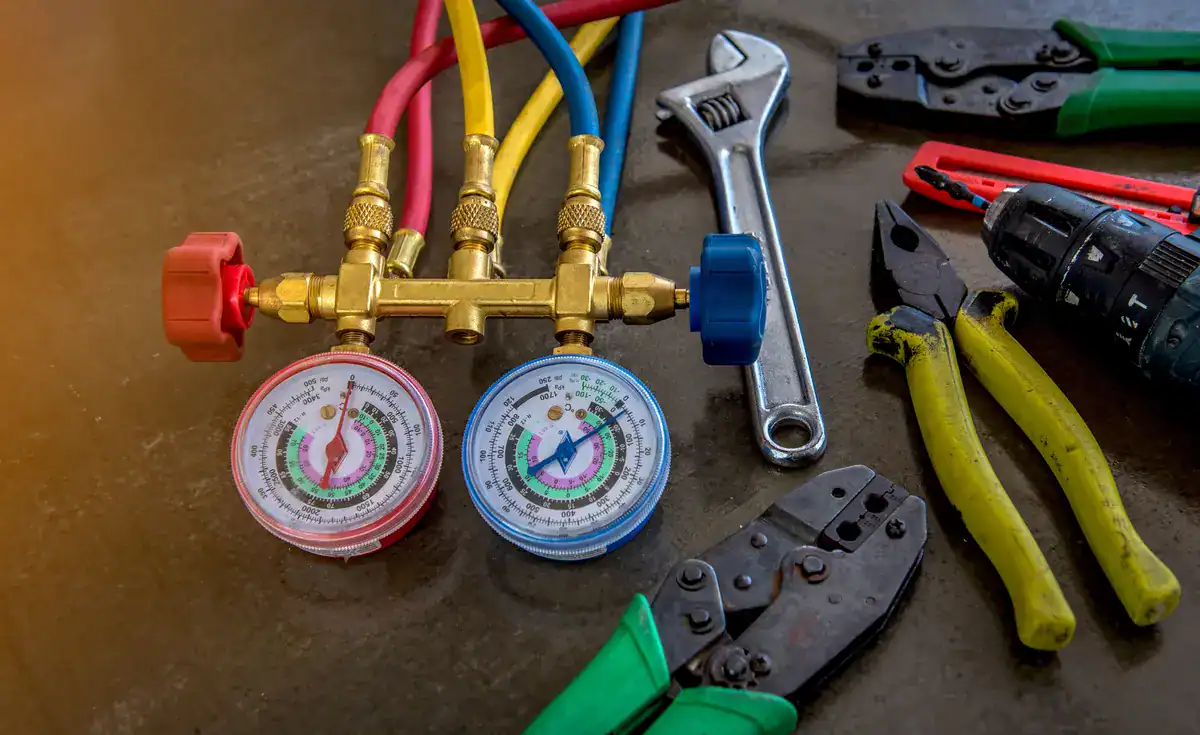
A dependable multimeter is one of the most important diagnostic tools you will own. It helps you test voltage, continuity, and electrical components safely. Alongside that, a quality manifold gauge set is needed to measure refrigerant pressure and diagnose cooling system performance. These two tools alone can help you troubleshoot the majority of HVAC issues.
Other foundational tools include a refrigerant recovery machine, vacuum pump, and refrigerant scale. These ensure you can safely remove and recharge refrigerant according to compliance standards. A sturdy set of hand tools—such as wrenches, nut drivers, screwdrivers, and pliers—is equally essential for both installation and repair tasks.
As you begin offering heating services, tools like combustion analyzers, thermometers, and leak detectors become crucial for accurate diagnostics and safe operation. Owning the right tools early allows you to take on a wide range of jobs without delays or the need to borrow equipment.
Choosing Tools That Support Your HVAC Business Plan
Your HVAC business plan should guide which tools you buy first. For example, if you plan to focus on residential HVAC work, you may prioritize refrigerant handling equipment and diagnostic tools. If your goal is to specialize in commercial or rooftop units, you may need heavier-duty tools, lifting equipment, or advanced electrical testers.
A well-written business plan also helps you budget for tools in stages. Many HVAC business owners start with the essentials, take on smaller jobs, and then reinvest profits into more advanced tools. This approach keeps your startup costs manageable without limiting the services you can offer.
Insurance Considerations When Buying HVAC Tools
Because HVAC tools are valuable and often exposed to job-site risks, it’s wise to protect them through HVAC business insurance. Many policies offer coverage for lost, stolen, or damaged tools, ensuring that equipment issues don’t bring your workflow to a halt.
Insurance also protects you from liabilities related to customer property or on-site incidents. Including tool protection in your insurance coverage gives you financial security and helps you operate with confidence.
Organizing Your Tools for Efficiency
Having the right HVAC tools is important—but knowing how to organize, maintain, and transport them is just as essential. Many HVAC technicians develop a system for storing tools in their service vehicles, keeping diagnostic equipment, hand tools, and safety gear easily accessible. This level of organization reduces job time, minimizes frustration, and allows you to appear more professional during every service call.
Regular maintenance—cleaning gauges, replacing worn hoses, checking calibration—also ensures your equipment performs accurately and lasts longer.
Using Tools to Build a Strong Professional Image
The tools you choose influence how customers perceive your business. When you arrive with well-maintained equipment and handle repairs efficiently, customers associate your work with reliability and expertise. This positive impression feeds directly into customer satisfaction, referrals, and long-term service agreements.
Your tools are an extension of your brand, helping you stand out in a competitive HVAC market.
How to Market Your HVAC Business Using Your Expertise and Tools
Tools help you do the job—but they also help you promote your business. Sharing photos of your equipment, explaining how you perform diagnostics, or showcasing upgrades on social media can help build trust with potential clients. Educational tips, before-and-after images, and maintenance advice are great ways to demonstrate expertise.
Understanding how to market your HVAC business means highlighting what sets you apart—your professionalism, your tools, your training, and your reliable process. Customers often choose HVAC providers based on perceived expertise and trustworthiness, and showing your tools in action reinforces both.
Local visibility, timely service, positive reviews, and clear branding all help build a strong customer base. Your tools become part of your marketing story—proof that you’re equipped to handle any job.
Start With Essentials, Grow With Demand
You don’t need every tool immediately to start an HVAC business, but you do need the right ones. Begin with core diagnostic equipment, essential installation tools, and basic electrical and safety gear. As your company expands and your services diversify, you can invest in advanced tools that improve efficiency and expand your capabilities.
When paired with a thoughtful HVAC business plan, proper insurance coverage, and strong marketing strategies, the right HVAC tools set you up for long-term success and profitability.